Description
Dual Peptide Complex for Regenerative and Tissue Repair Research
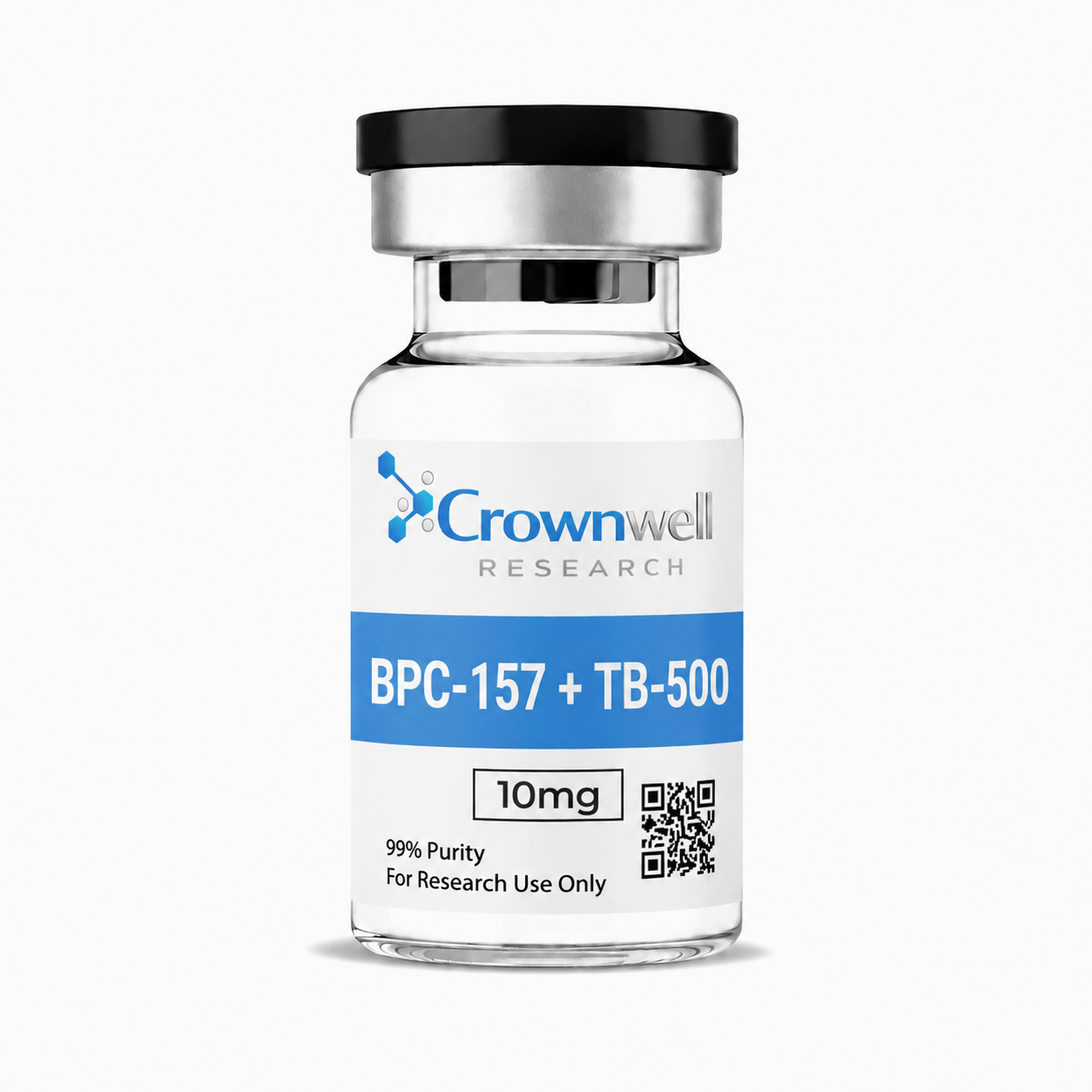
BPC-157 / TB-500 combines two of the most extensively researched regenerative peptides into a single formulation designed for laboratory investigation of tissue repair, inflammation, recovery, and cellular regeneration. Researchers frequently study this peptide combination because the two compounds appear to act through complementary biological pathways, making the blend a popular subject in musculoskeletal, tendon, ligament, gastrointestinal, and wound-healing research.
BPC-157 is a synthetic peptide derived from a naturally occurring protective protein found in gastric juice. It has been investigated for its potential role in supporting angiogenesis, tendon and ligament healing, gastrointestinal integrity, and modulation of inflammatory responses.
TB-500 is a synthetic research peptide based on the active region of thymosin beta-4, a naturally occurring protein involved in cell migration, tissue remodeling, angiogenesis, and wound repair. Laboratory studies have explored its influence on muscle recovery, connective tissue regeneration, and cellular repair following injury.
When studied together, BPC-157 and TB-500 are commonly investigated for their potential synergistic effects in promoting tissue regeneration while helping regulate inflammation throughout the healing process.
Areas of Active Research
Musculoskeletal Recovery
Researchers continue to investigate the combination in experimental models involving tendon, ligament, muscle, and connective tissue injuries. The blend is frequently studied for its potential role in supporting structural repair and functional recovery following tissue damage.
Wound Healing
Preclinical research has explored the ability of both peptides to support cellular migration, collagen organization, angiogenesis, and tissue remodeling during wound repair. Their complementary mechanisms have made the combination a frequent subject in regenerative medicine research.
Gastrointestinal Research
BPC-157 has been widely investigated for its effects on gastrointestinal tissues, including intestinal barrier integrity, gastric protection, and recovery following experimental injury. The combination allows researchers to evaluate both localized and systemic repair mechanisms.
Angiogenesis and Blood Vessel Formation
Both peptides have demonstrated activity in laboratory studies involving angiogenesis. Researchers continue to explore how improved vascularization may contribute to nutrient delivery, tissue regeneration, and healing.
Inflammation Research
Experimental studies suggest both peptides may influence inflammatory signaling pathways while supporting the body’s natural healing processes. Their combined effects remain an area of ongoing investigation in regenerative biology.
Proposed Mechanisms of Action
Current research suggests the BPC-157 / TB-500 combination may:
- Support angiogenesis and healthy blood vessel formation
- Promote migration of cells involved in tissue repair
- Assist collagen synthesis and connective tissue remodeling
- Support tendon, ligament, muscle, and joint recovery
- Help maintain gastrointestinal tissue integrity
- Modulate inflammatory signaling pathways
- Promote cellular regeneration following experimental injury
Although research continues to evolve, the combination remains one of the most widely studied peptide blends within regenerative science.
Why Researchers Choose BPC-157 / TB-500
- Combines two highly researched regenerative peptides
- Investigated across multiple tissue and healing models
- Frequently studied for complementary mechanisms of action
- Popular in musculoskeletal, connective tissue, and wound-healing research
- Broad preclinical literature supporting continued scientific investigation
Crownwell Research Quality
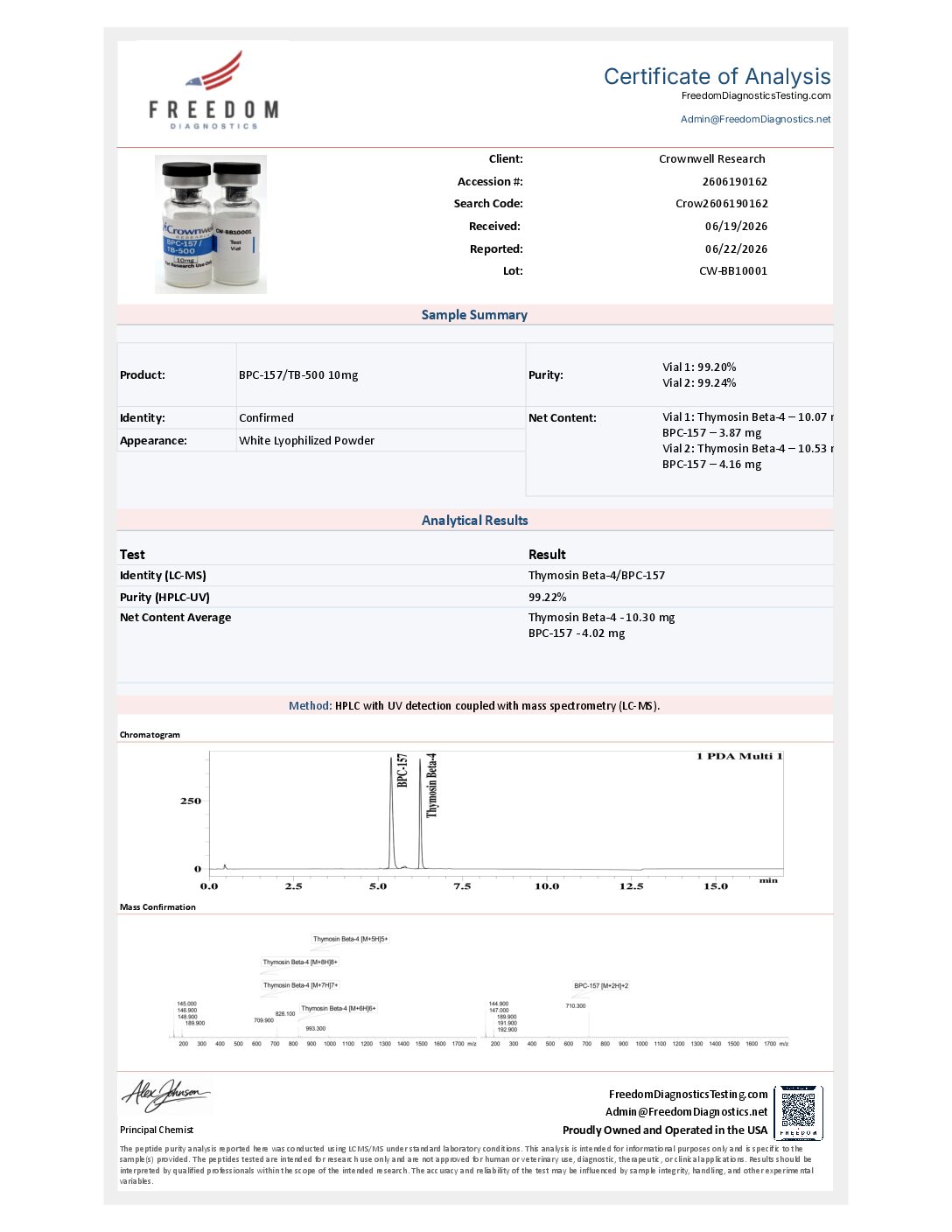
Every vial of Crownwell Research BPC-157 / TB-500 is manufactured to rigorous research standards and undergoes comprehensive quality testing to verify identity, purity, and consistency. Each batch is produced exclusively for scientific, laboratory, and educational research applications.
For Research Use Only. Not intended for human consumption, therapeutic use, or diagnostic procedures.