A Summary of Anti-aging peptide bioregulators induce reactivation of chromatin (2006)
One of the most intriguing theories in aging research is that many of our genes don’t disappear as we get older—they simply become less active. This study explored whether several well-known peptide bioregulators could “wake up” these inactive genes in elderly individuals.
Researchers examined three peptides:
- Epitalon
- Livagen
- Vilon
Their goal was to determine whether these peptides could influence chromatin, the material that packages DNA inside every cell.
Why Chromatin Matters
Think of DNA as a massive instruction manual.
Chromatin determines which pages of that manual are open for reading and which pages are tightly closed.
As we age:
- More sections of DNA become tightly packed.
- Important genes become harder for cells to access.
- Protein production slows.
- Cellular repair becomes less efficient.
Scientists believe this gradual “closing” of DNA may contribute to many features of aging.
What the Researchers Did
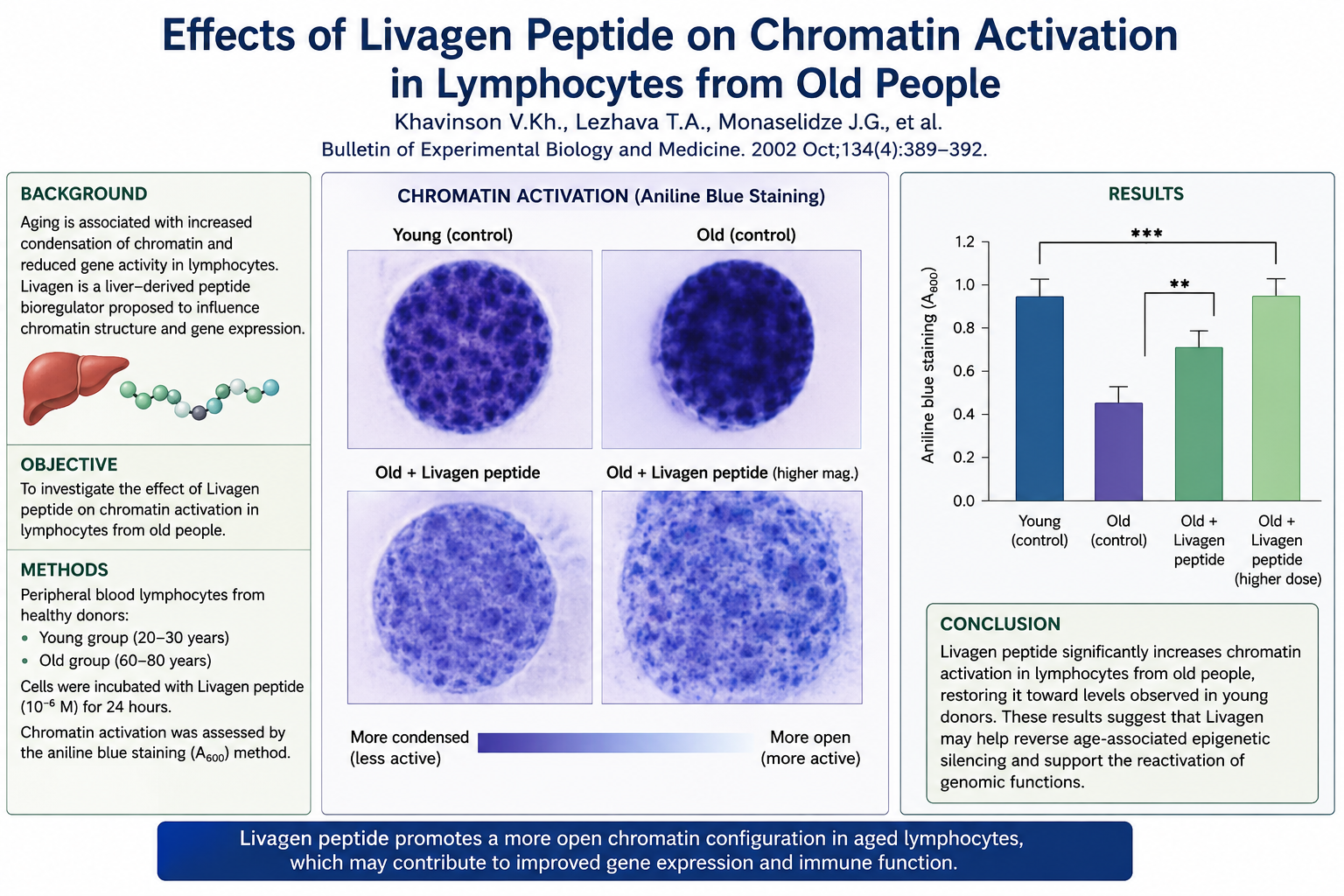
The researchers collected lymphocytes (a type of white blood cell) from adults between 75 and 88 years old.
The cells were exposed to Epithalon, Livagen or Vilon in the laboratory.
The team then examined changes in chromatin structure under the microscope to determine whether the peptides altered gene accessibility.
What They Found
The researchers observed that all three peptide bioregulators caused chromatin to become less condensed.
In practical terms, this means portions of DNA that had become tightly packed with age became more accessible.
Specifically, the peptides appeared to:
- Increase activity of ribosomal genes involved in protein production.
- Relax condensed chromatin throughout the cell nucleus.
- Reactivate genes that had become suppressed with aging.
- Improve the overall accessibility of genetic material.
Epitalon and Livagen also affected specific structural regions of chromosomes (chromosomes 1 and 9), while Vilon did not produce this particular effect.
Why This Is Interesting
Many anti-aging strategies focus on replacing hormones or reducing oxidative stress.
This research proposes something different:
Instead of adding new molecules, peptide bioregulators may help cells use the genetic information they already possess more effectively.
If genes responsible for repair, protein synthesis, and normal cellular maintenance become active again, aging cells may function more like younger ones.
This concept is often referred to as gene reactivation or epigenetic regulation because it changes how genes are expressed without changing the DNA sequence itself.
Important Limitations
While these findings are fascinating, several limitations should be kept in mind:
- The study was performed on isolated cells in the laboratory, not by treating people directly.
- The sample size was relatively small.
- The researchers measured changes in chromatin structure rather than improvements in health or lifespan.
- Additional studies are needed to determine whether these cellular effects translate into meaningful clinical benefits.
Takeaway
This study provides evidence that peptide bioregulators such as Epitalon, Livagen, and Vilon may help reverse certain age-related changes in chromatin organization, making important genes more accessible again.
Although much more research is needed before firm conclusions can be drawn, the findings support the idea that peptide bioregulators may influence aging at one of the most fundamental levels of biology—the regulation of gene activity itself.
Read the Original Research
Anti-aging peptide bioregulators induce reactivation of chromatin (PubMed)