Description
BPC-157
High-Purity Synthetic Peptide for Laboratory Research
Overview
BPC-157 (Body Protection Compound-157) is a synthetic peptide consisting of 15 amino acids, originally derived from a naturally occurring protein fragment found in gastric juice. In laboratory settings, BPC-157 has been widely studied for its stability, structural resilience, and interaction with biological signaling pathways.
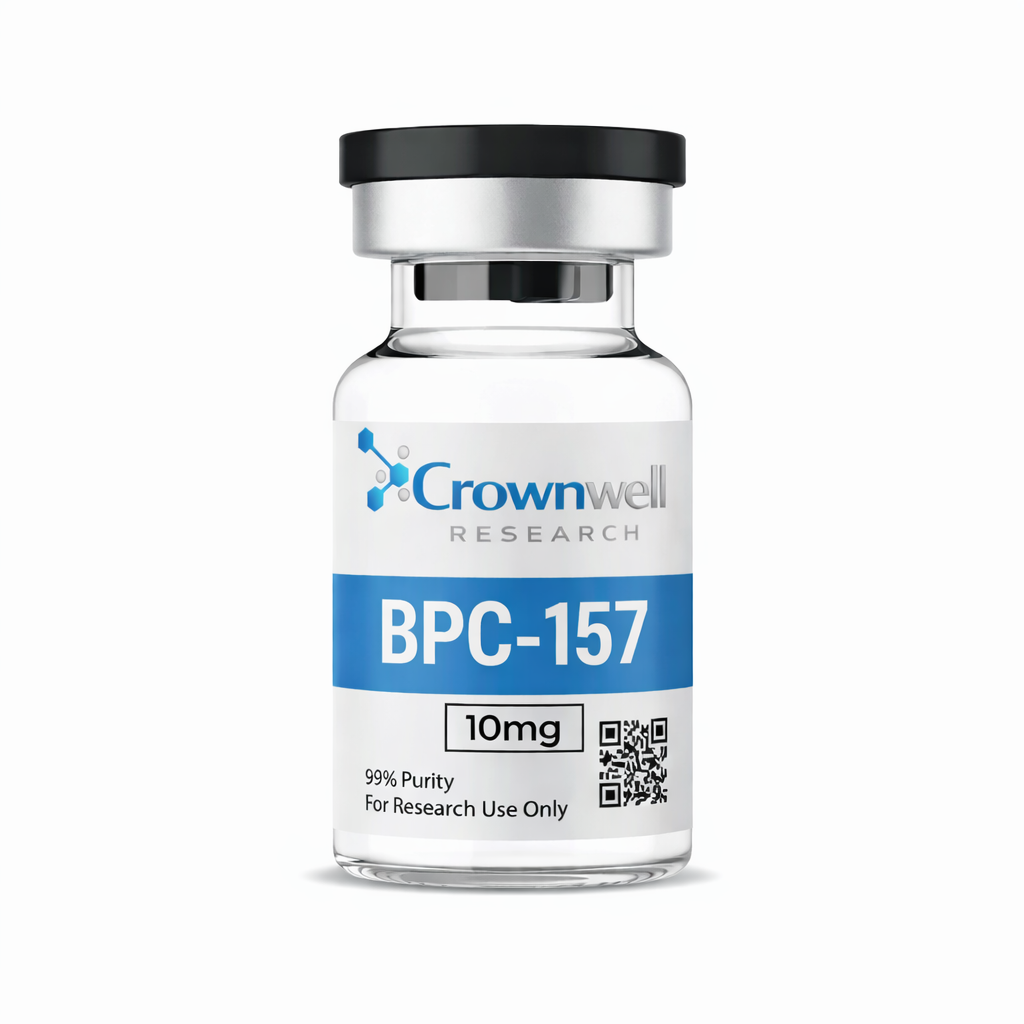
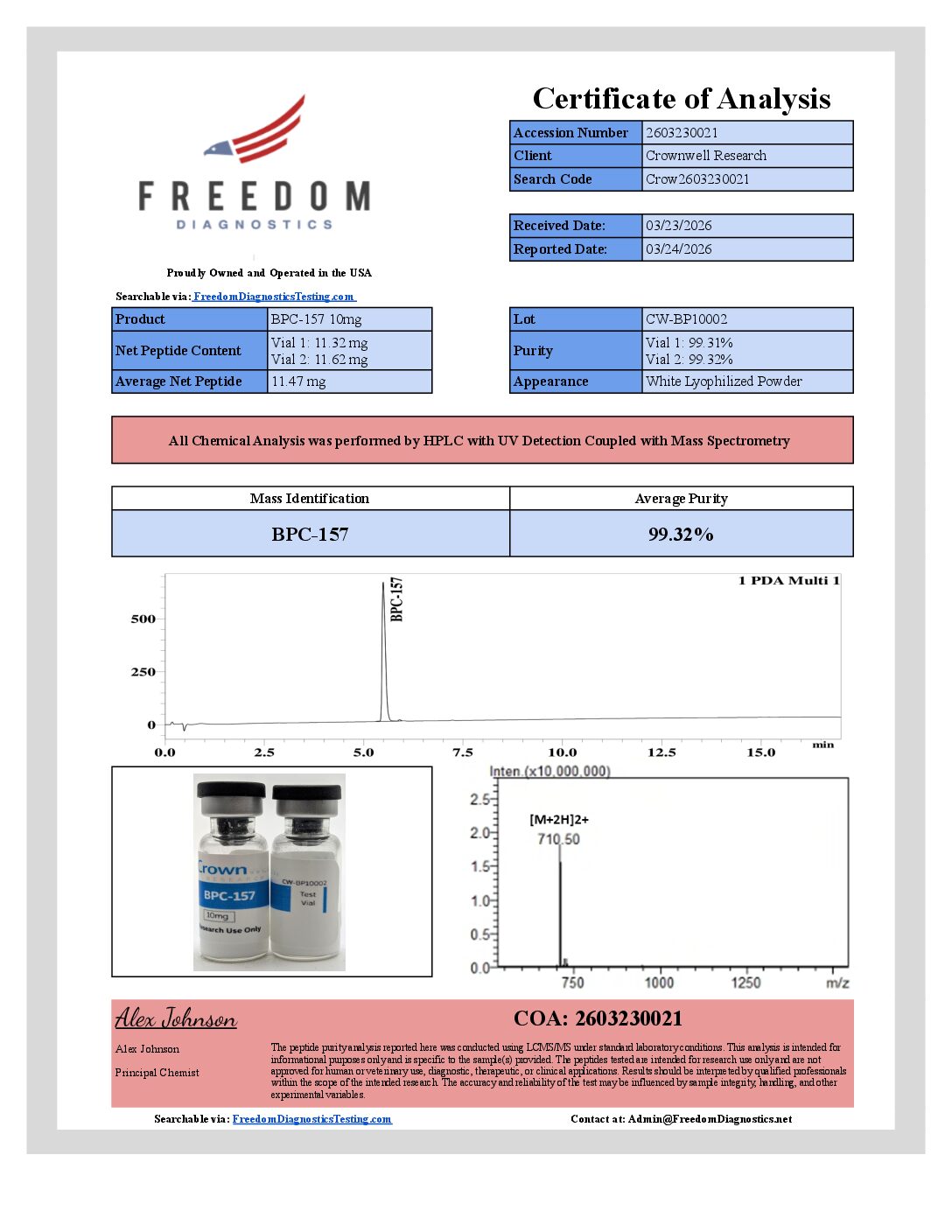
Crownwell Research provides high-purity, pharmaceutical-grade BPC-157 (>99% by HPLC) formulated for research, analytical, and educational use only.
Key Characteristics
- Sequence Length: 15 amino acids (pentadecapeptide)
- Molecular Stability: High resistance to enzymatic degradation
- Purity: ≥99% (verified via HPLC/MS)
- Form: Lyophilized (freeze-dried) powder
- Solubility: Water-soluble under laboratory conditions
- Storage: Stable under controlled cold-chain conditions
Structural Profile
BPC-157 is notable for its compact peptide structure, which contributes to its stability across a range of experimental environments. Unlike many peptides that degrade rapidly, BPC-157 demonstrates enhanced resilience in simulated biological systems, making it a frequent subject of research in peptide stability and signaling pathways.
Research Applications
BPC-157 has been investigated in preclinical and laboratory models across multiple domains, including:
1. Cellular Regeneration Pathways
Research has explored how BPC-157 interacts with cellular repair signaling mechanisms, particularly those involving:
- Angiogenic signaling cascades
- Fibroblast activity
- Tissue remodeling pathways
2. Vascular and Nitric Oxide Systems
Studies have examined its relationship with:
- Nitric oxide (NO) signaling
- Vascular endothelial responses
- Blood flow regulation models
3. Gastrointestinal Models
Given its origin, BPC-157 has been studied in:
- Gastric tissue models
- Intestinal barrier integrity research
- Ulcer and mucosal repair simulations
4. Musculoskeletal Research
Laboratory investigations have explored its role in:
- Tendon and ligament models
- Muscle tissue regeneration pathways
- Connective tissue signaling
Mechanism Exploration (Preclinical Context)
In controlled research environments, BPC-157 has been associated with:
- Modulation of growth factor pathways
- Interaction with VEGF (vascular endothelial growth factor) systems
- Influence on nitric oxide synthase activity
- Stabilization of cellular stress responses
These mechanisms are still under investigation and are not fully characterized.
Product Specifications
- Compound: BPC-157
- Formulation: Lyophilized powder
- Purity: ≥99%
- Testing Methods: HPLC (High-Performance Liquid Chromatography), Mass Spectrometry
- Appearance: White to off-white powder
- Packaging: Sterile research vial
- Verification: QR-coded Certificate of Analysis (COA)
Quality Assurance
Every batch of BPC-157 from Crownwell Research undergoes rigorous third-party analytical testing to ensure:
- Verified purity levels
- Accurate molecular weight
- Absence of contaminants
- Batch consistency
Each vial is linked to a scannable COA, providing full transparency for laboratory validation.
Handling & Storage Guidelines
To maintain compound integrity:
- Store at -20°C or lower for long-term preservation
- Avoid repeated freeze-thaw cycles
- Reconstitute using sterile laboratory-grade solvents
- Use within controlled experimental environments
Why Crownwell Research?
Crownwell Research is built for precision, consistency, and transparency. Our approach emphasizes:
- High-purity synthesis standards
- Batch-level verification and traceability
- Strict research-use positioning for compliance
- Reliable sourcing and cold-chain handling
We prioritize providing compounds that meet the expectations of serious research environments.