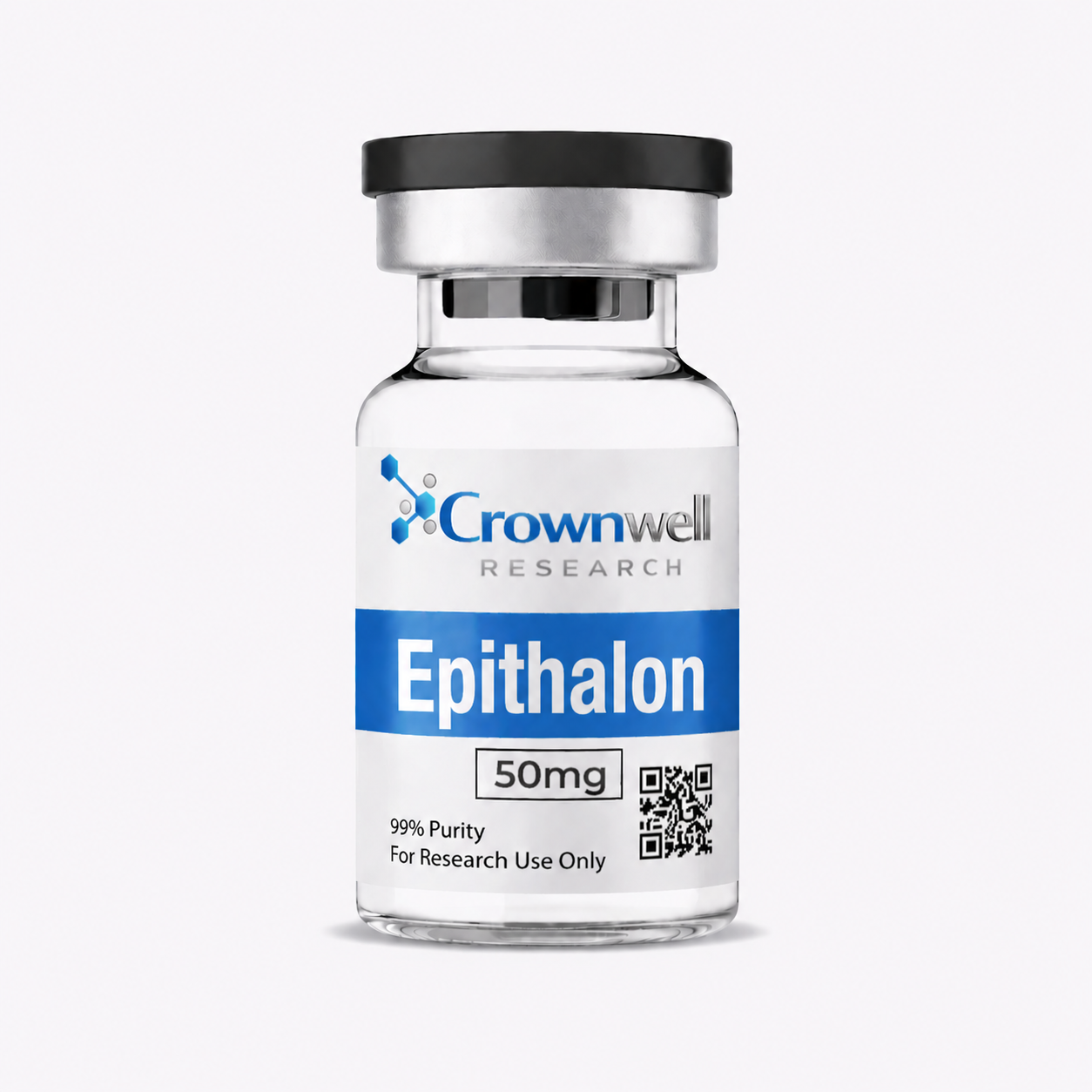
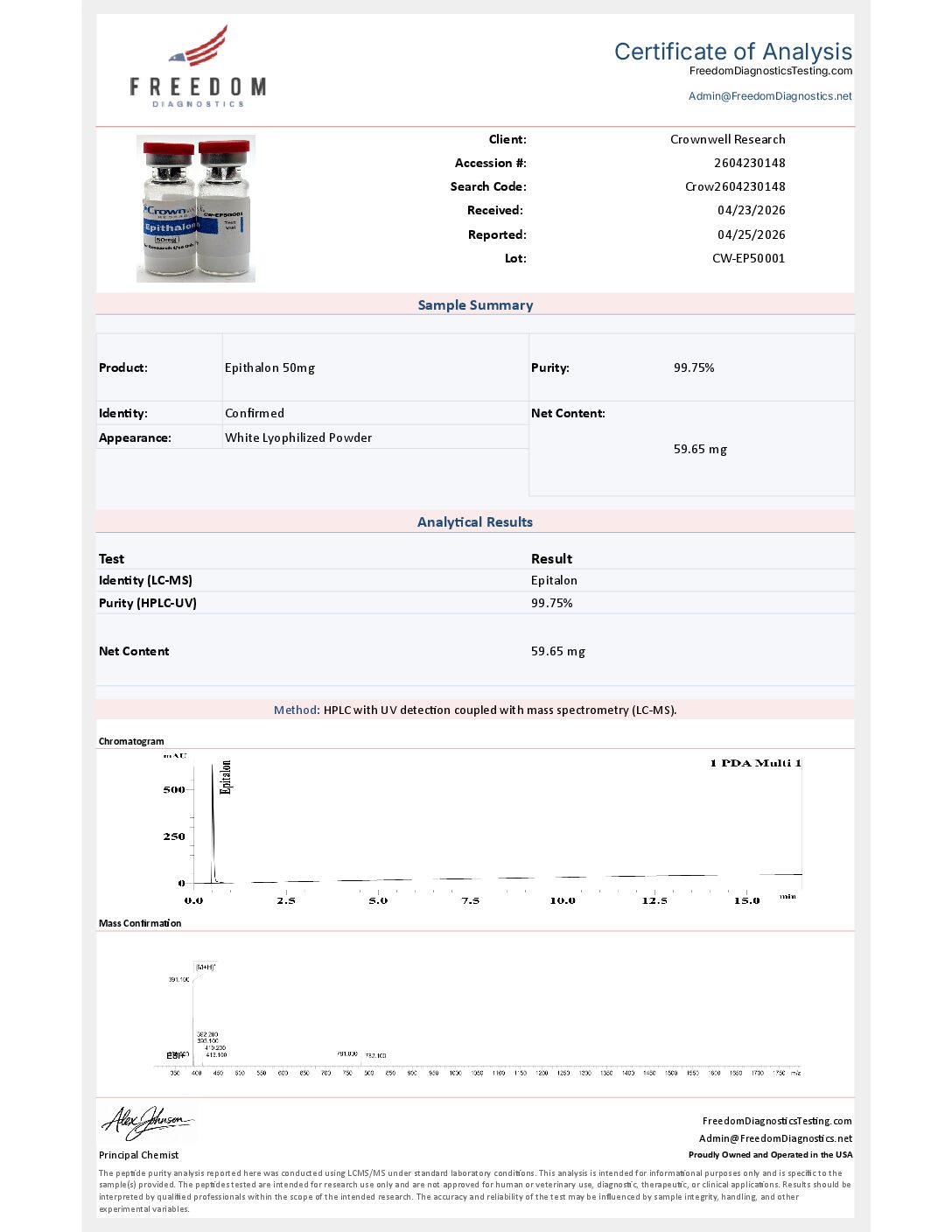
Description
Epitalon (AEDG) Peptide: Mechanisms, Research Applications, and Molecular Significance
Overview of Epitalon
Epithalon peptide (also referred to as AEDG) is a synthetic tetrapeptide composed of four amino acids: alanine, glutamic acid, aspartic acid, and glycine. This minimal peptide sequence is structurally derived from naturally occurring regulatory peptides associated with the pineal gland and has been widely examined in laboratory environments for its role in cellular regulation and genomic stability.
Due to its small size and defined structure, Epitalon is frequently utilized in controlled research models to investigate how short peptides may influence biological signaling systems at the cellular and molecular level.
Molecular Structure and Composition
- Sequence: Ala–Glu–Asp–Gly (AEDG)
- Peptide Class: Synthetic tetrapeptide
- Molecular Focus: Regulatory signaling and genomic interaction models
The simplicity of Epitalon’s structure allows for highly specific experimental applications, particularly in studies examining peptide–DNA interactions, transcriptional activity, and cellular replication pathways.
Mechanisms Studied in Research Settings
1. Telomerase Activity and Cellular Replication
One of the most widely studied aspects of Epitalon is its interaction with telomerase, the enzyme responsible for maintaining telomere length.
In laboratory models, telomeres serve as protective caps at the ends of chromosomes. Their progressive shortening is associated with cellular replication limits. Epitalon has been explored for its ability to influence telomerase-related processes, making it a focal compound in studies of cellular lifecycle regulation.
2. Gene Expression and Chromatin Modulation
Epithalon has also been investigated in research involving epigenetic regulation—specifically how peptides may affect gene expression without altering DNA sequences.
Areas of study include:
- Chromatin remodeling
- DNA accessibility
- Regulatory gene activation pathways
These mechanisms are central to understanding how cells respond to environmental and internal signaling cues.
3. Circadian Rhythm and Pineal Signaling Models
Derived from pineal-associated peptide structures, Epitalon is frequently examined in studies related to circadian biology.
Research applications include:
- Hormonal signaling pathways
- Light/dark cycle regulation models
- Cellular timing mechanisms
These studies contribute to broader insights into biological rhythms and regulatory signaling networks.
4. Cellular Stability and Oxidative Research Models
Epitalon has been included in experimental models exploring:
- Cellular stress response pathways
- Oxidative balance mechanisms
- DNA protection and repair signaling
Such models aim to better understand how cells maintain structural and functional integrity under varying conditions.
Why Epitalon Is Valuable in Research
Epitalon’s significance in laboratory research stems from several key attributes:
- Minimalist structure allows precise experimental control
- Defined amino acid sequence enables reproducibility
- Multi-pathway relevance across genomic, endocrine, and cellular models
- High stability in lyophilized form for long-term storage and consistency
These properties make it a versatile compound for advanced biochemical and molecular research.
Epitalon vs. Other Peptide Compounds
In research environments, Epitalon is often studied alongside other peptides to evaluate differences in molecular behavior and signaling pathways.
| Peptide | Primary Research Focus |
|---|---|
| Epitalon (AEDG) | Telomerase, gene regulation, circadian signaling |
| GHK-Cu | Tissue remodeling, copper-binding peptide studies |
| MOTS-c | Mitochondrial signaling and metabolic regulation |
| TB-500 | Cytoskeletal and actin-related cellular models |
This comparative approach helps researchers isolate mechanisms and better understand peptide-specific functions.
Handling and Storage (Research Context)
To maintain integrity in laboratory environments:
- Store lyophilized peptide in a cool, dry environment
- Avoid repeated temperature fluctuations
- Reconstitute only under controlled research conditions
- Use sterile laboratory techniques during handling
Crownwell Research Quality Standard
Crownwell Research provides Epitalon as a high-purity, research-grade peptide manufactured for analytical precision and experimental reliability.
Each batch is produced with strict quality considerations to ensure:
- Consistent peptide composition
- High purity levels
- Reliable performance across research applications
Compliance Statement
Epithalon offered by Crownwell Research is intended strictly for:
- Laboratory research
- Analytical testing
- Educational and scientific study
Not for human or veterinary use.
Not for diagnostic or therapeutic purposes.
Frequently Asked Questions
What is Epithalon?
Epitalon is a synthetic tetrapeptide (AEDG) studied in laboratory settings for cellular regulation and telomerase-related processes.
What is Epithalon used for in research?
It is commonly investigated for gene expression, chromatin modulation, and circadian signaling pathways.
Is Epithalon for human use?
No. This product is strictly for research use only and not for human or veterinary use.
What does AEDG mean?
AEDG refers to the amino acid sequence: alanine, glutamic acid, aspartic acid, and glycine.